
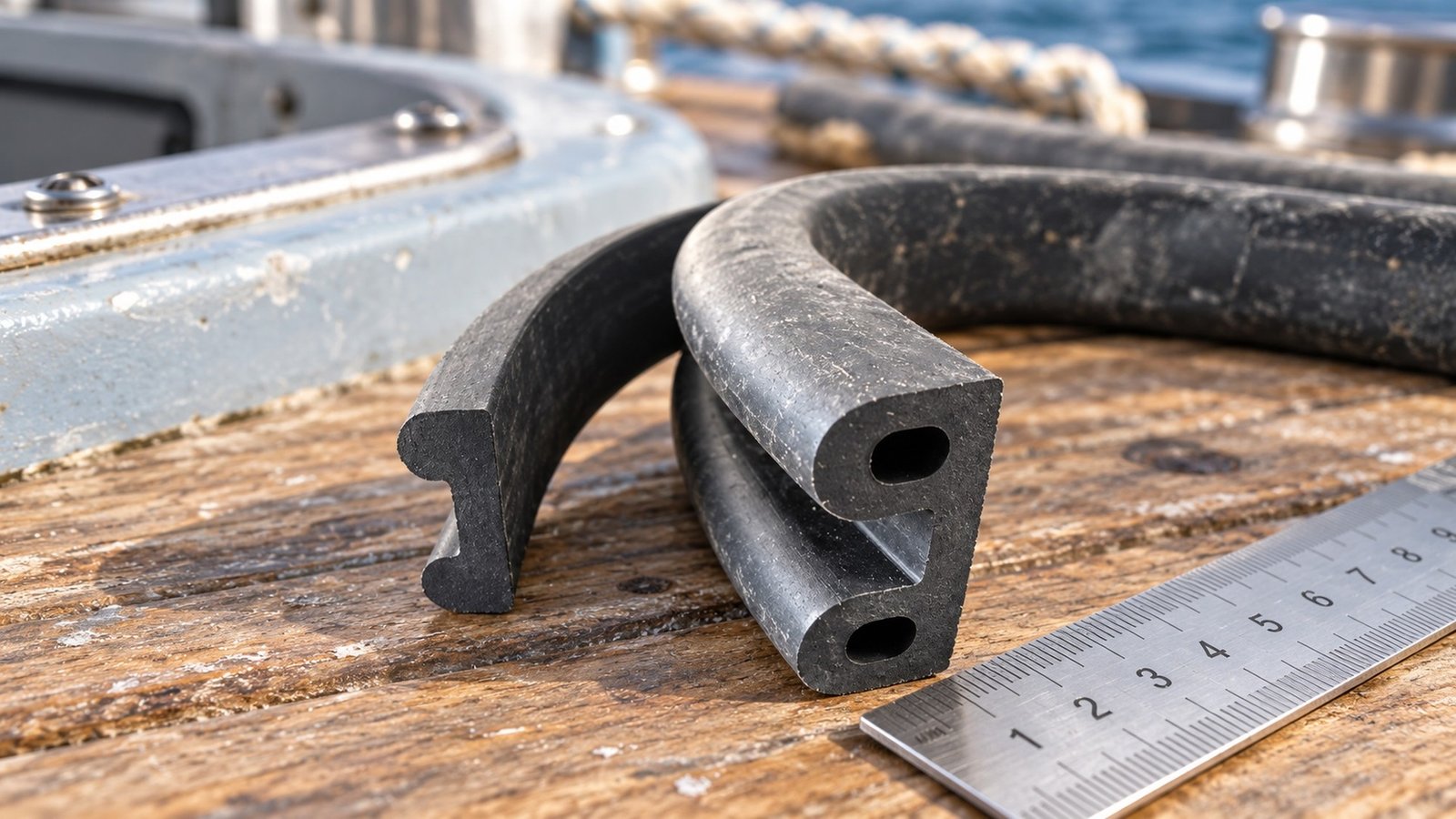
Hatch Leaks on Fish Carrier Vessels: Where Water Gets In and What to Replace is a practical sourcing guide for fishing boat repair shops, marine hardware distributors, port-side stores, and small shipyards. It focuses on RFQ preparation, replacement matching, material selection, and mixed-order planning for CIDMEN export customers.
Practical Summary
For this repair situation, the buyer should first confirm the failure symptom, then match the part by material, size, connection type, and working position, and finally group the replacement with its dependent parts so the repair does not need a second order.
Related CIDMEN Product Categories
Why This Fails So Often Here
On fishing boats working tropical Southeast Asian waters, hatch sealing hardware rarely fail from normal use alone. Salt water, constant humidity, sun exposure, fish handling residue, deck impact, and short repair windows all shorten service life. The failure patterns below repeat across fish ports, repair counters, and small yards in Indonesia, Vietnam, Thailand, Malaysia, the Philippines, and nearby island markets. By the time a part fails visibly, the damage has usually been growing for weeks in a place the crew cannot easily see.
The repair team rarely has time for a long technical discussion. So the practical question is not “what is this part called”. It is: what actually failed, what must be replaced with it, and how do we describe it clearly enough to get the right part the first time.
What the Symptoms Usually Tell You
1. Water collects along the hatch edge, not the middle – the seal has lost compression at the perimeter, usually where the dogs or clamps sit far apart.
2. Hatch dogs feel loose or need extra force to close – the rubber seal has taken a permanent set, so it no longer compresses at the same handle position.
3. Rust streaks run down from the hinge line – the hinge fasteners are corroding and may have already loosened the hinge plate.
4. Water appears only in rough weather – a seal can hold in calm water and fail when the deck flexes or waves break over the hatch.
5. Seal surface shows a flat band or a cut groove – the seal is past compression, or a metal edge is cutting into the rubber.
Comparison: Symptom, Cause, and What to Check
| Leak location | Likely cause | Parts to replace |
|—|—|—|
| Hatch perimeter | seal compression loss | hatch seal, dogs or clamps |
| Hinge line | corroded hinge fasteners | hinges, bolts, sealant |
| Dog and clamp points | seal set, loose dogs | seal, dogs, latches |
| Corner joints | seal cut by metal edge | seal, corner trim |
| Only in rough weather | deck flex, weak seal | seal, clamps, hinges |
What Must Be Replaced Together
- Hatch dogs and clamps – a new seal changes compression height, so the closing hardware must be checked at the same time.
- Hinges and hinge fasteners – the hinge line is usually the second leak path once the seal is renewed.
- Sealant and fastener – renewed seals need a clean, sealed fastener line to hold compression.
Replacing only the visibly broken item is the most common reason a repair comes back. Where a part depends on another for alignment, sealing, load transfer, or electrical connection, quote both in the same RFQ.
Inspection Checklist Before Ordering
- Identify the exact position on the boat and what the part connects to.
- Photograph the failed part from the front, side, and connection area.
- Measure diameter, length, thickness, hole spacing, thread, or voltage as applicable.
- Note the material or finish of the failed part, and whether it corroded, cracked, bent, or wore.
- Record quantity per boat and number of boats to be repaired.
- Note whether the buyer will resell the part or use it in a repair job.
RFQ Details That Prevent a Wrong Order
A useful RFQ for this repair includes: failed part photos, close-up of the connection or sealing surface, approximate measurements, vessel type and size, working position on the boat, material or finish preference, quantity, whether related parts should ship together, destination port, and packing requirements for resale or workshop use.
If the exact model or standard is unknown, say so. A photo with a ruler or a handwritten note is more useful than a guessed part number.
Common Ordering Mistakes
- Ordering by product name only, without the working position or connection type.
- Replacing the failed item but not the worn counterpart that caused the wear.
- Assuming any stainless grade is equal; 304 and 316 behave differently in salt exposure.
- Mixing similar sizes in one carton with no label, which causes wrong picks at the repair counter.
- Guessing a standard or part number instead of sending photos and measurements.
FAQ
How do I know whether a failed part in this group needs replacement or just tightening?
Check for loss of section thickness, pitting, deformation, cracked mounting points, or a connection that no longer holds under normal load. If any of these are visible, replacement is the safer route for a working boat.
Can I replace only the broken item, or must the whole set be replaced?
Often not. The failed part may have worn its counterpart. Quote the working set so the repair does not repeat in a few weeks.
What photos should I send for a replacement match?
One full view, one close-up of the connection or sealing area, one side view showing thickness or profile, and one photo of the installed position. Add a ruler for scale when drawings are not available.
Is 316 stainless always the right choice?
No. 316 is a common choice for exposed saltwater fittings, but galvanized or bronze parts remain practical in specific positions. The decision depends on exposure, load, wear, and maintenance cycle.
Can several part families ship in one order?
Yes. Fasteners, deck fittings, hose fittings, rigging parts, and hatch hardware are commonly combined. Group them clearly by part family in the RFQ.
How should I describe a part I cannot name in English?
Send photos with measurements and describe where it sits on the boat and what it connects to. Application description is usually enough to narrow the match.
Do I need to confirm a standard before ordering?
If the boat or yard requires a specific standard, confirm it in writing. Otherwise send the old part or drawing and let the supplier match by dimensions and function.
How often should hatch seals be replaced on a fish carrier working tropical waters?
There is no fixed calendar interval. Replace when the seal no longer returns after compression, shows a flat band or cut groove, or when the hatch needs extra force to close. In hot, humid, high-sun conditions with daily fish handling, seals usually reach that point faster than on a general cargo boat, so check the perimeter seal at every major repair window rather than waiting for a visible leak.
Water only comes in during rough weather. Is the seal still the problem?
Usually yes, and it is often already past its useful compression. A worn seal can hold in calm water and fail when the deck flexes or waves break over the hatch. Check the seal together with dog alignment and deck stiffness, because a new seal on a flexing hatch cover will fail again quickly.
Can I fit a rubber strip by the metre instead of a moulded hatch seal?
Only if the profile matches the original section and the corners can be joined without leaving a gap. Most fish carrier hatches use a continuous moulded or spliced seal, and a flat strip forced into a profiled groove will not hold compression at the corners. Measure the section height and width, and confirm whether the original is solid, hollow, or has a lip.
Which fasteners should be renewed together with the seal?
Renew the hinge fasteners and any dog or clamp bolts that show rust streaking, pitting, or loose torque. The hinge line is the second leak path once the seal is renewed, and a corroded fastener that fails under load can tear the hinge plate out of the deck flange. Specify the grade and finish in the RFQ, because 304 and 316 behave differently in constant salt exposure.
How do I measure a hatch seal well enough to get a correct replacement?
Give the section height and width, the total length around the opening, the corner radius or joint type, and the compression direction. Add photos of the seal in place and of a cut cross-section, with a ruler in frame. If the seal is glued, note the adhesive used, because a different adhesive can attack the new rubber.
Prepare a Clear RFQ
For faster quotation, send product names, photos or drawings, key dimensions, material preference, quantity, vessel application, destination, and any packaging or labeling needs.
Contact CIDMEN or use the Inquiry Basket to share your mixed marine hardware requirement.
FAQ
References and Related Reading
- CIDMEN Products: https://cidmen.com/products/
- CIDMEN Marine Hardware: https://cidmen.com/products/marine-hardware/
- CIDMEN Marine Fasteners: https://cidmen.com/products/marine-hardware/marine-fasteners/
- CIDMEN Rigging Accessories: https://cidmen.com/products/marine-hardware/rigging-accessories/
- CIDMEN Mooring Equipment: https://cidmen.com/products/marine-outfitting/mooring-equipment/
- CIDMEN Anchoring Equipment: https://cidmen.com/products/marine-outfitting/anchoring-equipment/
- CIDMEN Marine Pumps & Valves: https://cidmen.com/products/marine-electrical-mechanical/marine-pumps-valves/
- CIDMEN Marine Lighting: https://cidmen.com/products/marine-electrical-mechanical/marine-lighting/
Send a Marine Parts RFQ
Share product photos, drawings, material, quantity, and destination port. CIDMEN can match marine hardware, outfitting fittings, and spare parts for fishing boat repair and supply stores.